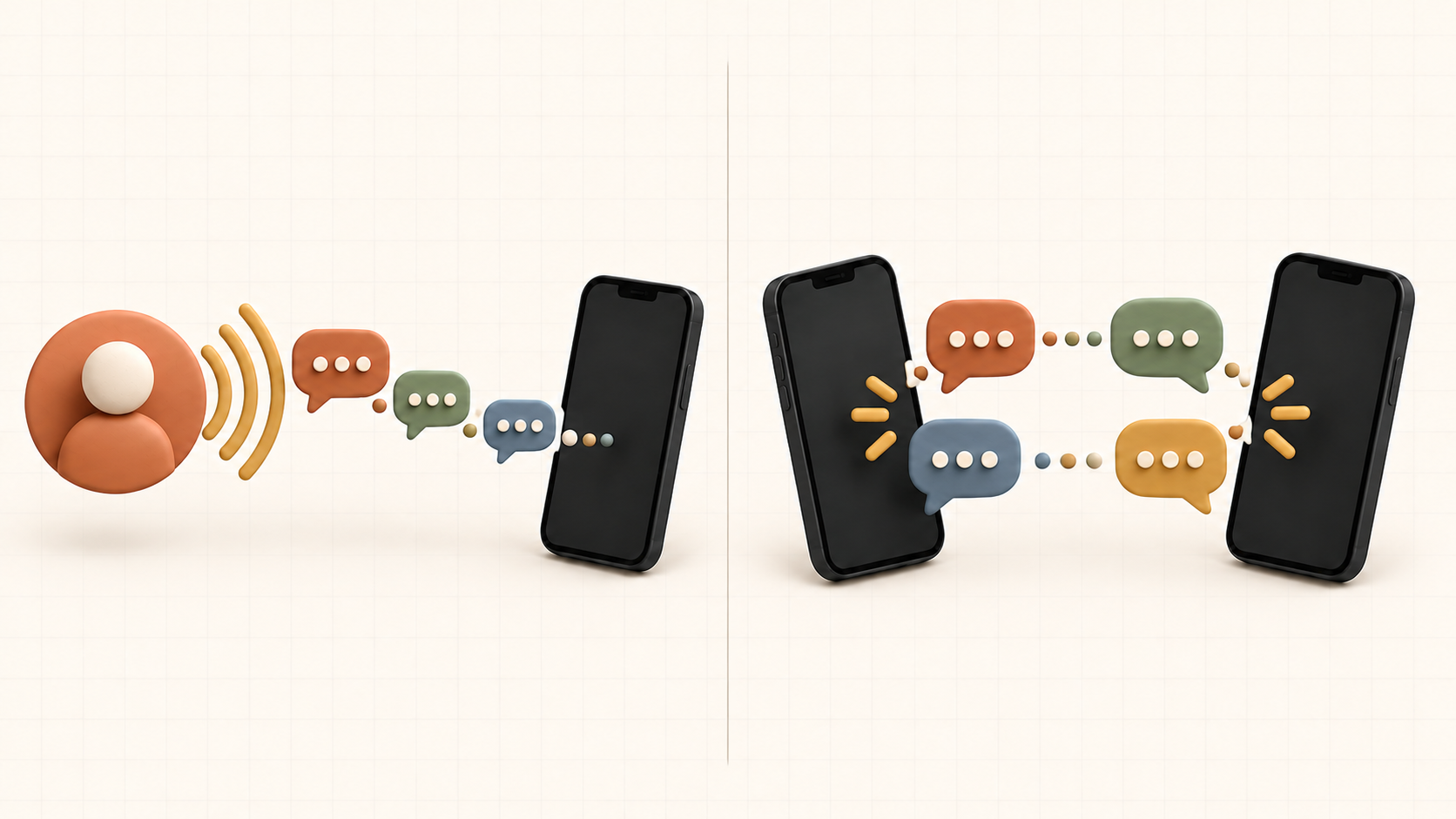
You watch someone's videos, recognize their stories, understand their humor, and know what they care about. They may have liked your comment or replied during a livestream. The connection feels familiar, but does that make it a friendship?
The central difference between an online friendship vs. a parasocial relationship is mutual recognition. An online friendship is built by two people who know each other and participate in the relationship. A parasocial relationship is a one-way emotional connection to a public figure, creator, performer, fictional character, or other media persona who does not know the individual in the same personal way.
Parasocial connections are common and not automatically unhealthy. The problem begins when the feeling of familiarity is mistaken for private access, mutual obligation, or a friendship that has not actually been formed.
What Is a Parasocial Relationship?
The APA Dictionary of Psychology defines a parasocial relationship as a one-sided emotional connection with a real or imaginary person someone does not know personally, often a celebrity, performer, media figure, influencer, or AI-based agent.
The experience can resemble friendship from the audience member's side. Repeated exposure creates familiarity. A creator may speak directly to the camera, share personal experiences, answer common questions, and appear in someone's daily routine.
What is missing is mutual development. The viewer knows a curated public persona; the media figure usually does not know the viewer as an individual or participate in a private relationship with them.
What Is an Online Friendship?
An online friendship is a mutual relationship conducted mainly or entirely through digital communication. Both people recognize each other, exchange information, respond to each other's needs and boundaries, and build a shared history.
They may have met through a game, forum, class, community, app, or shared interest. They do not have to meet in person for the friendship to be meaningful. See are online friendships real? for a broader look at what gives digital friendships genuine value.
Online Friendship vs. Parasocial Relationship at a Glance
| Online friendship | Parasocial relationship |
|---|---|
| Both people know each other as individuals | One person knows a public or fictional persona |
| Communication affects both sides | Content mainly flows from the media figure to the audience |
| Personal disclosure can be mutual | Most disclosure is public, curated, or part of content |
| Boundaries are negotiated between two people | Boundaries are set for an audience or platform |
| Shared experiences belong to the relationship | Familiarity grows mainly through repeated viewing |
| Each person can ask for care, space, or repair | The audience member cannot require personal care or access |
| The relationship exists by mutual choice | The emotional bond may exist only on one side |
The distinction is not about whether the interaction happens online. Both can. It is about whether a mutual interpersonal relationship exists.
1. Mutual Awareness
In an online friendship, each person knows the other as a particular individual. They recognize more than a username passing through an audience. They have enough direct interaction to form a personal understanding of each other.
In a parasocial relationship, one person may know a great deal about the media figure while the figure knows little or nothing about them. Even if the creator recognizes a username, that recognition may not include personal knowledge, responsibility, or friendship.
A useful question is:
If I stopped viewing or commenting, would this person know that a specific relationship had changed?
A "no" does not make the connection meaningless. It suggests the connection is audience-based rather than a mutual friendship.
2. Two-Way Participation
Online friends influence the conversation together. Either person can introduce a subject, ask a question, disagree, change a plan, or request support. The relationship develops through both people's choices.
Parasocial interaction is mainly organized around content created for an audience. Comments, livestream chats, polls, and reactions can create real interaction, but they do not necessarily create equal participation in a personal relationship.
A creator may respond warmly to hundreds of followers. That response is genuine communication, yet it may still belong to their public role rather than a private friendship.
3. Public Disclosure vs. Personal Disclosure
A creator can appear extremely open. They may discuss family, mental health, relationships, fears, routines, or past experiences. Because the disclosure feels intimate, viewers may feel they know the whole person.
Public disclosure is still selected for a broad audience. It may be sincere, but it is shaped by privacy, editing, storytelling, safety, sponsorship, and the creator's professional goals.
Friends reveal themselves in a more reciprocal context. One person's disclosure changes what the other understands, and both can respond privately over time. The information belongs to a developing relationship rather than a broadcast.
This distinction also protects privacy. Neither creators nor online friends owe every personal detail as proof of authenticity.
4. Shared History vs. Repeated Exposure
Repeatedly watching someone produces familiarity. You know their catchphrases, preferences, recurring stories, and reactions. That familiarity can feel like shared history because their content accompanied parts of your life.
Shared history in a friendship is co-created. Both people remember the late conversation, collaborative project, disagreement, joke, or game because both participated in it.
Compare:
- "Their videos helped me through a difficult month"
- "We helped each other through a difficult month"
Both experiences can matter. Only the second describes a mutual event inside a friendship.
5. Boundaries and Access
An online friend can communicate a personal boundary directly:
I cannot call tonight, but I can message tomorrow.
I keep my location private.
I do not want to discuss that subject.
A public figure sets boundaries for an audience through blocked topics, moderation rules, contact policies, paid tiers, or decisions about what to publish. Those boundaries are not invitations to negotiate for an exception.
Following, subscribing, donating, buying merchandise, moderating a community, or being a long-time viewer does not purchase personal access. A boundary remains valid even when someone has invested time, attention, or money.
For boundaries within a mutual connection, use the scripts in how to set boundaries in online friendships.
6. Expectations of Care and Reciprocity
Friends can reasonably expect some level of mutual consideration, although capacity and communication styles differ. They can discuss an imbalance and decide what the friendship should look like.
In a parasocial relationship, the public figure is not responsible for personally returning the viewer's emotional investment. They do not owe a reply, private meeting, explanation of personal decisions, or support during a difficult moment.
The viewer's feelings are still real. The expectation of reciprocity is what needs to match the relationship.
If two people know each other but the effort remains unequal, that may be a one-sided online friendship rather than a parasocial relationship. The distinction is that a one-sided friendship began as a mutually recognized connection, even if its reciprocity later became poor.
7. What Happens When Contact Ends
When an online friend leaves, both people may understand that a particular relationship has changed. There may be a conversation, conflict, mutual drift, block, or unanswered message.
When a creator stops posting, retires a character, changes direction, or blocks an audience member, the viewer may experience a strong sense of loss. The media figure may not know that this individual bond existed.
That loss does not need to be mocked. It does need to be understood accurately so that grief does not become a demand for access or an attempt to bypass a boundary.
Interactions That Do Not Automatically Mean Friendship
Modern platforms blur the line by making public figures feel reachable. None of the following proves a friendship by itself:
- They liked or replied to your comment
- They recognized your username during a stream
- They followed you back
- You exchanged a few direct messages
- You pay for a membership or subscription
- You moderate their public community
- They used a story you submitted
- They called their audience "friends," a "family," or a similar group name
- An automated or AI-based account addressed you personally
These actions can be warm, memorable, and meaningful. Friendship requires a larger pattern of mutual personal recognition and choice.
Can a Parasocial Relationship Become a Friendship?
Sometimes a viewer and creator eventually interact as peers and form a real friendship. The change is possible, but exposure alone does not cause it.
The relationship would need to develop new qualities:
- Both people recognize the connection as personal
- Communication occurs beyond audience performance
- Interest and disclosure become mutual
- Each person can set boundaries and decline contact
- Neither person treats payment, status, or admiration as an obligation
- Shared experiences accumulate through two-way participation
Do not behave as if a possible future friendship already exists. A creator's politeness, accessibility, or business relationship is not consent to private closeness.
Are Parasocial Relationships Unhealthy?
Not necessarily. Research and clinical guidance describe both possible benefits and risks. A parasocial connection may provide entertainment, inspiration, comfort, identity exploration, or a route into a community of people with similar interests.
It may be worth reassessing when it:
- Replaces sleep, work, school, health, or mutual relationships
- Produces a sense of ownership over the person's decisions
- Leads to harassment, stalking, threats, or boundary violations
- Causes spending you cannot afford
- Makes ordinary friends feel disappointing by comparison
- Creates intense betrayal when the public figure acts outside your imagined relationship
- Requires constant monitoring of their content or location
- Becomes your only meaningful source of connection
Cleveland Clinic's overview of parasocial relationships similarly emphasizes that the effect on daily life, boundaries, and other relationships matters more than simply having the connection.
How to Restore Clearer Boundaries
You do not have to reject everything you enjoy. The goal is to bring expectations back into alignment.
Name the Relationship Accurately
Try: "This person is important to me as a creator, but they do not know me as a friend." Accurate language can reduce confusion without dismissing your feelings.
Reduce Constant Exposure
Turn off selected notifications, avoid checking every update, and create times when content is not part of your day. A little distance can reveal whether the connection has become automatic.
Participate in the Community, Not Only the Persona
Shared interest can become mutual friendship when audience members talk to one another respectfully. Engage as a peer without using the creator's community to compete for attention or status.
Invest in Reciprocal Contact
Message an established friend, join an activity where people interact as equals, or use shared interests to make friends online. Mutual connections need time that passive viewing cannot replace.
Respect Every Boundary
Do not search for private addresses, contact relatives, create new accounts after a block, or use paid services to force access. Review anonymous chat safety tips for privacy practices that apply in both directions.
Seek Support if the Connection Is Controlling Your Life
If thoughts, spending, checking, or distress feel difficult to control, consider speaking with a qualified mental health professional. Support can help you understand what the connection provides and build other ways to meet those needs without shame.
Frequently Asked Questions
What is the difference between an online friendship and a parasocial relationship?
An online friendship is mutually recognized and developed by two people. A parasocial relationship is a one-way emotional connection to a public figure, media persona, fictional character, or similar figure who does not know the individual in the same personal way.
Is every relationship with an influencer parasocial?
No. Influencers can have genuine private friendships. Their relationships with most audience members remain parasocial because the audience knows the influencer while the influencer does not know each viewer personally.
Does a creator replying to me make us friends?
Not by itself. A reply is an interaction. Friendship requires a broader pattern of mutual recognition, personal knowledge, voluntary contact, reciprocity, and shared history.
Is a parasocial relationship fake?
The viewer's feelings and the effects on their life can be real. What is absent is a mutual interpersonal relationship with the media figure. Calling it one-sided describes its structure, not whether the experience matters.
Is a one-sided friendship parasocial?
Usually not. In a one-sided friendship, both people know each other and some relationship exists, but effort or care is badly imbalanced. In a parasocial relationship, mutual personal recognition never developed.
Can fictional characters be part of parasocial relationships?
Yes. A person can develop familiarity, attachment, or identification with a fictional character through repeated media exposure even though the character cannot know them.
Are AI companions parasocial relationships?
They can create parasocial or relationship-like experiences because the system responds without possessing human mutual awareness or responsibility. Users should understand the product's privacy practices, commercial incentives, limitations, and lack of human reciprocity.
How can I enjoy a creator without becoming overly attached?
Keep expectations realistic, respect boundaries, watch spending and time, maintain reciprocal relationships, and remember that public disclosure creates familiarity without automatically creating personal access.
The internet can carry both real friendship and one-way familiarity. Mutual awareness, choice, reciprocity, and shared participation tell you which relationship you are actually in.