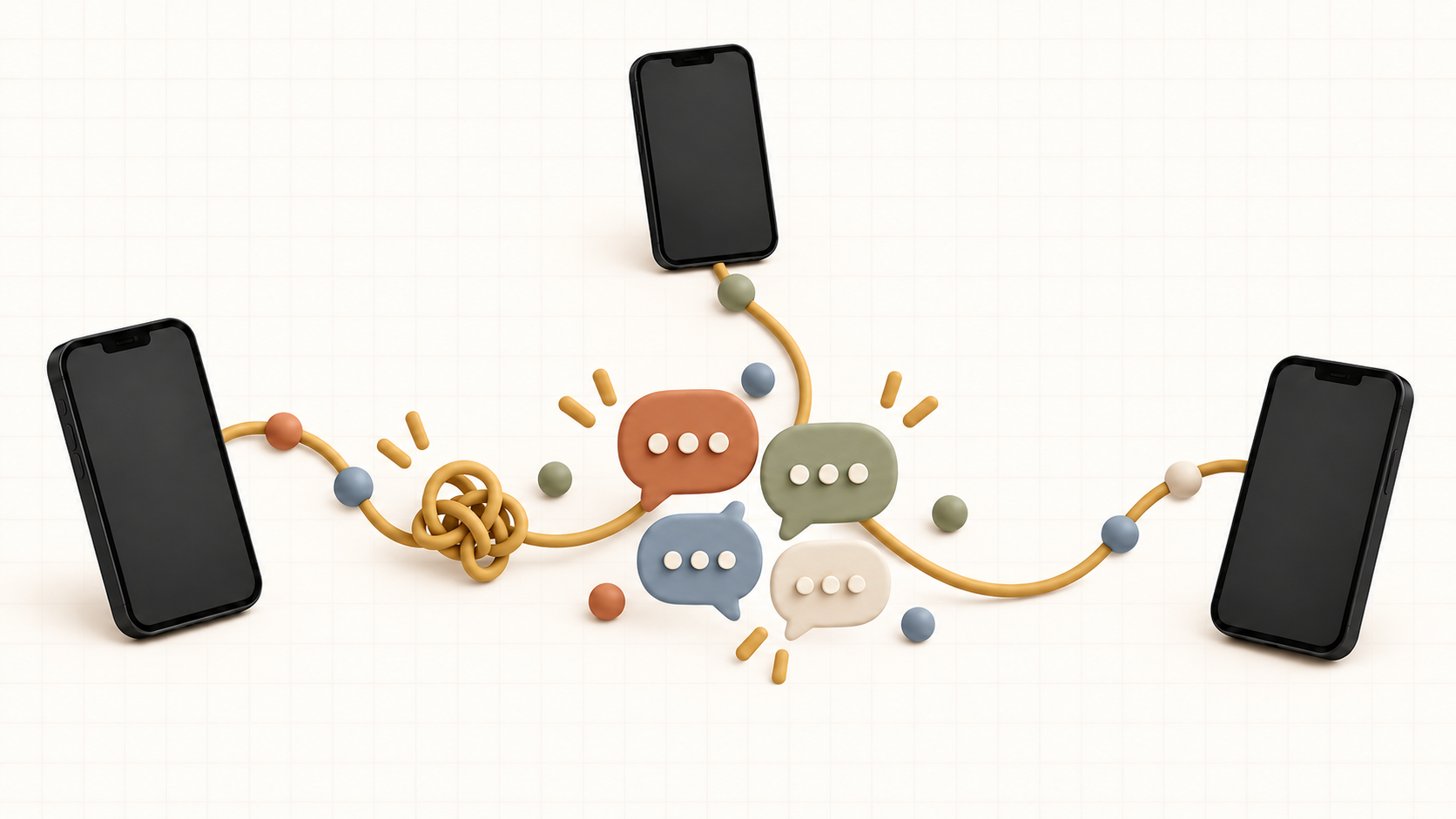
Jealousy in an online friendship can appear when a close friend joins another group, spends more time with someone else, replies to other people first, or seems less available than before. You may worry that you are being replaced even when nobody has said the friendship is ending.
Feeling jealous does not automatically make you controlling or a bad friend. It is a feeling, not a command. What matters is how you interpret it and what you do next.
These nine steps can help you understand the feeling, communicate without demanding exclusivity, and decide whether the friendship needs reassurance, clearer expectations, or more distance.
Why online friendship jealousy can feel so intense
Online communication leaves many gaps for interpretation. You may see that someone is active without knowing why they have not answered you. A group chat may show them laughing with other people while your private message remains unread. Time zones, work, school, notifications, and different communication habits can all change what you see.
Digital spaces also make comparison easy. You may notice:
- Who receives the fastest reply
- Which inside jokes you do not understand
- Who appears together in games or group chats
- Whether someone reacts publicly but answers privately later
- How often another friend is mentioned
- When your usual routine changes
These signals can feel precise without telling the whole story. "They replied to someone else" is an observation. "They have replaced me" is an interpretation. Separating the two creates room for a calmer response.
1. Name the trigger instead of judging yourself
Begin with the specific moment that activated the feeling. "I am jealous" is broad. A more useful description might be:
- I felt left out when plans were discussed in a group I was not part of
- I felt anxious when our usual evening conversation stopped
- I compared myself with someone who seems funnier or more confident
- I worried that a new friendship would make mine less important
- I felt embarrassed because I wanted more attention than I received
Then name what the moment appears to threaten: belonging, predictability, closeness, status, or reassurance. This is not about proving the fear is true. It helps you identify what you may actually need.
2. Pause before sending a reaction
Jealousy can create an urge to act immediately. You might send several messages, leave a group dramatically, post something designed to provoke a response, or ask your friend to prove that you matter more.
Create a pause long enough for the first surge to pass. You can:
- Draft the message without sending it
- Mute the conversation temporarily
- Step away from activity indicators or profile updates
- Write down the facts you actually know
- Do something that does not involve checking for a reply
A pause is not silent punishment. It is time used to avoid turning a feeling into behavior you will need to repair. If you already reacted harshly, these steps for apologizing to an online friend can help you take responsibility without making excuses.
3. Separate evidence from the story around it
Make two short lists: what happened and what you are assuming.
What happened:
- They answered twice this week instead of most days
- They joined a game with other friends
- They did not invite me to one group call
The story I am telling myself:
- I am boring
- The other person is more important
- Our friendship is ending
An assumption may eventually prove accurate, but treating it as a confirmed fact can lead to accusations. Look for a pattern over time rather than using one evening as a verdict.
Context matters too. A busy schedule, new project, family issue, or need for quiet may reduce someone's availability without changing how they feel about you. If communication has changed, ask rather than investigate their activity across multiple platforms.
4. Decide whether you need a request or a boundary
Jealousy often points toward one of two needs:
- A request: something you would appreciate but the other person may decline
- A boundary: an action you will take to protect your own wellbeing
A request might be:
I miss our longer conversations. Would you be interested in choosing a time to catch up this week?
A boundary might be:
I am going to mute the group for a while because checking it is making me anxious. I will still answer direct messages when I can.
Neither gives you authority over your friend's other relationships. "You cannot talk to that person" is control, not a boundary. Our guide to setting boundaries in online friendships includes examples for response times, calls, privacy, and difficult conversations.
5. Widen your sources of connection
One online friend can become the center of your social world, especially if the friendship is intense, convenient, or available during a lonely period. Then every delay carries more weight because it feels as though your entire sense of connection depends on one person.
You do not need to replace the friendship or become socially busy overnight. Build a wider base gradually:
- Return to a hobby community you enjoy
- Join a recurring group activity
- Message someone you have lost touch with
- Spend time on an offline interest
- Develop routines that do not depend on another person's availability
- Let different friends meet different conversational needs
Multiple connections do not make any one friendship fake. They reduce pressure on both people and make ordinary changes easier to tolerate.
6. Talk about the change without making an accusation
If the feeling continues or the friendship has genuinely changed, speak directly. Choose one observable issue and explain its effect without claiming to know the other person's motive.
Try this structure:
- Describe the change you noticed
- Explain how it has felt
- Ask for their perspective
- Make one reasonable request
We used to plan a call most weekends, and that has not happened lately. I miss that time and have been unsure whether your schedule changed. How has the current routine felt to you? Would you want to plan a call sometime this month?
Avoid opening with "You care about them more than me" or presenting screenshots of their activity. The goal is to understand the friendship, not win a case.
These techniques for disagreeing respectfully online can help if the conversation becomes defensive.
7. Agree on realistic expectations
Two friends may value each other while expecting different amounts of contact. One person may enjoy daily messages; another may prefer a longer conversation every few weeks. Neither rhythm is automatically more sincere.
Discuss what is realistic rather than demanding constant reassurance:
- How often do you each naturally message friends?
- Are spontaneous calls welcome, or should you plan them?
- Is it okay to send several thoughts before receiving a reply?
- How should either person ask for quiet time?
- Do group interactions count as staying in touch for both of you?
- Are there routines you genuinely want to keep?
An agreement should be flexible enough for work, health, family, and time-zone changes. It should also be mutual. One person should not have to remain constantly available to prevent the other's anxiety. See how to maintain an online friendship for ways to build a sustainable rhythm.
8. Respect friendships that do not include you
Your friend is allowed to have private conversations, separate groups, different interests, and relationships with people you do not know. You do not need access to every interaction to remain important.
Respecting this means avoiding behaviors such as:
- Demanding screenshots or message histories
- Testing whether they will choose you over someone else
- Joining activities only to monitor them
- Insulting or competing with their other friends
- Posting vague messages intended to make them feel guilty
- Treating delayed replies as disloyalty
It is reasonable to feel hurt if you are repeatedly excluded from plans that directly involved you or if someone uses other friendships to humiliate you. Address that behavior specifically. Do not turn a legitimate concern into a demand for exclusivity.
9. Judge the response and the pattern
A healthy conversation does not require your friend to solve every insecurity. It does give both people room to speak honestly and make voluntary choices.
After you communicate, notice whether your friend:
- Listens without mocking the feeling
- Explains their perspective without deliberately provoking you
- Respects reasonable boundaries
- Offers only commitments they can actually keep
- Allows you to have other friendships too
- Avoids using attention as a reward or punishment
Also judge your own pattern. Are you able to accept a no, tolerate some uncertainty, and let the other person have an independent life? If the same conflict repeats despite honest conversations, the friendship may need more space or different expectations.
If effort consistently travels in only one direction, compare the pattern with these signs of a one-sided online friendship.
Messages you can use
When you miss the old routine
I have missed our usual chats lately. I know schedules change, so I wanted to ask how you are feeling about our current rhythm.
When you felt excluded
I felt left out when the plan changed and I learned about it afterward. Could you tell me what happened?
When you need reassurance without demanding it
I have been feeling uncertain about whether we are still on the same page as friends. I would rather ask directly than make assumptions.
When you recognize your own jealousy
I noticed I was comparing myself with your other friends and reacting defensively. That is mine to work on. I would still like to talk about how our communication has changed.
When you need to step back
I care about our friendship, but I need to take some pressure off this conversation and focus on other parts of my life for a while. I will reach out when I feel calmer.
Keep the message proportionate. A thoughtful paragraph is usually more useful than dozens of messages explaining every fear at once.
If your online friend is jealous of your other friendships
You can acknowledge the feeling without accepting control.
I understand that the change has felt uncomfortable. I care about you, and I am also going to keep spending time with my other friends. I am happy to discuss a routine that works for both of us.
Do not hand over passwords, private conversations, location access, or screenshots to prove loyalty. Reassurance should not require surveillance.
If they repeatedly demand exclusivity, threaten self-harm to prevent you from leaving, contact people around you, impersonate you, or punish you for other relationships, treat the situation as a safety concern rather than an ordinary jealousy conversation. Save relevant evidence when safe, use blocking and reporting tools, and tell someone you trust. Review these online friendship red flags for additional warning signs.
When jealousy may be pointing to a real problem
Not every uncomfortable feeling is an overreaction. Jealousy may be mixed with a genuine friendship problem when:
- Your friend deliberately compares you with others to make you insecure
- You are included only when nobody else is available
- Plans are repeatedly hidden after commitments were made with you
- Your concerns are mocked or used against you
- Attention is withdrawn to force compliance
- The friendship has become consistently one-sided
Focus on the behavior rather than competing with a third person. The useful question is not "How do I become their favorite?" It is "Does this friendship still offer mutual respect, honesty, and room for both people?"
If the answer remains no, stepping back may be healthier than continuing to compete. These steps for getting over an online friend can help if the connection ends.
Frequently asked questions
Is it normal to feel jealous of an online friend?
Friendship jealousy can occur when you fear losing closeness, attention, or belonging. The feeling itself does not define your character. Use it as information, then choose behavior that respects both people.
Does a slow reply mean my friend prefers someone else?
No. Response time can reflect schedules, energy, notification habits, time zones, or the type of message. Look at the broader pattern and ask directly if communication has changed. If someone has gone quiet, follow these calm steps when an online friend stops replying.
Should I tell my friend I am jealous?
You can, especially when the feeling connects to a specific change that affects the friendship. Speak about your experience without demanding that your friend end another relationship or prove your rank.
How do I stop checking whether my friend is online?
Turn off activity indicators when possible, mute notifications temporarily, remove shortcuts that encourage repeated checking, and plan something else during the times you usually monitor. If the urge remains intense, take more distance and seek support from someone you trust.
Can an online friendship recover after jealous behavior?
Sometimes. A sincere apology, changed behavior, clearer expectations, and respected boundaries can rebuild trust. Recovery is less likely when monitoring, guilt, threats, or competition continue.
Let the friendship have room
A secure friendship does not require either person to be the other's only connection. It has room for changing schedules, separate groups, new interests, and honest conversations about what feels different.
When jealousy appears, slow the reaction down. Identify the actual trigger, separate facts from assumptions, ask for what you need without controlling the answer, and pay attention to the pattern that follows. The goal is not to eliminate every uncomfortable feeling. It is to build a friendship in which both people can care about each other and still remain free.