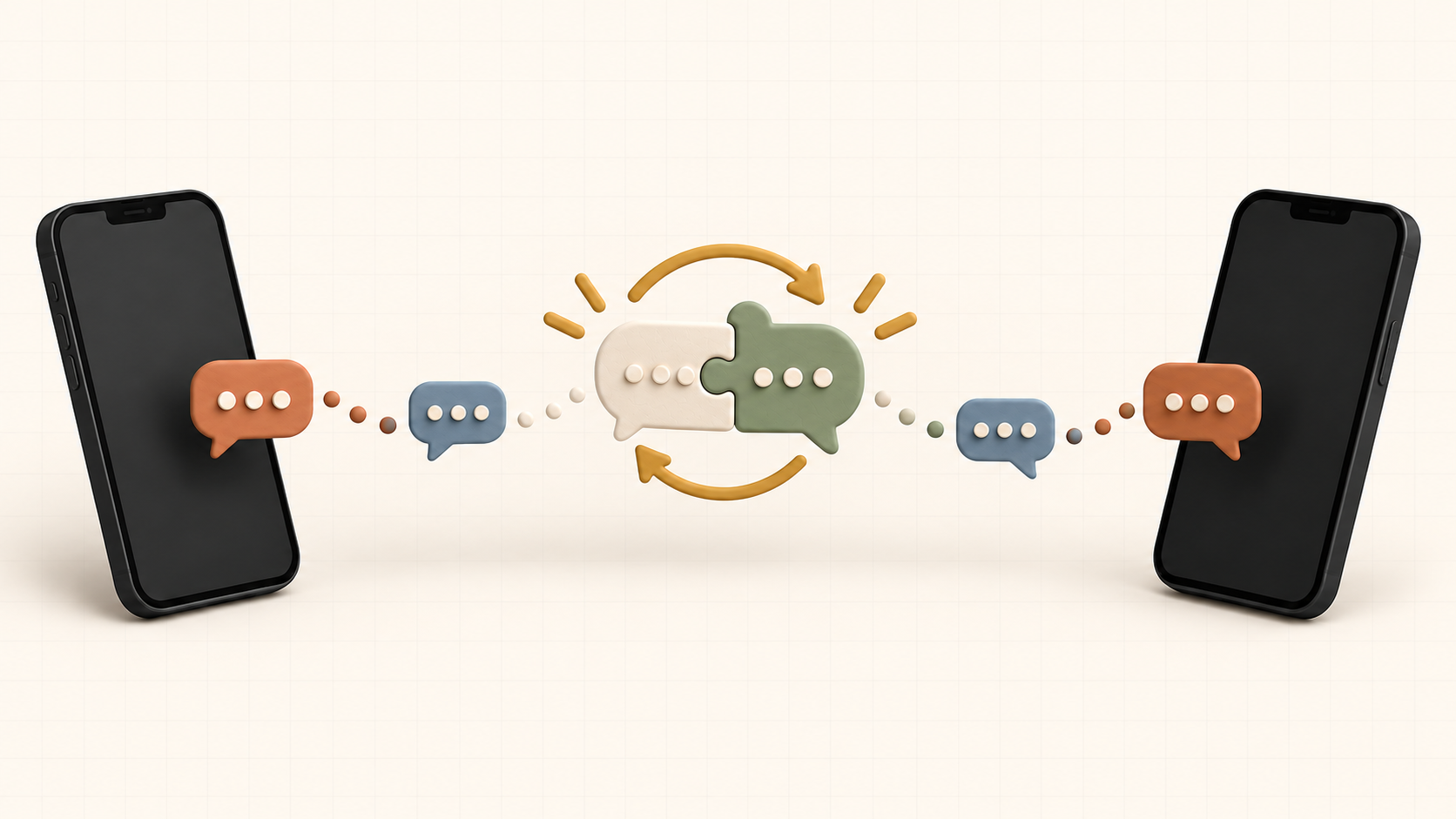
Online friendships often fade without one dramatic ending. A shared game changes, a community becomes quieter, schedules stop overlapping, or one delayed reply becomes several months of silence. You may still think about the person but worry that reaching out now would feel strange.
Learning how to reconnect with an online friend begins with a small goal. Your first message does not need to restore the entire friendship or explain every quiet month. It only needs to open a respectful door that the other person can choose to enter.
These 15 message examples cover mutual drift, long gaps, changed interests, your own disappearance, and unresolved tension.
Reconnection Is Different From Chasing a Reply
Reaching out after a mutual or long-term lapse is not the same as repeatedly messaging someone who is currently ignoring you.
A reconnection attempt may make sense when:
- Conversation faded gradually rather than ending with a clear rejection
- Neither person maintained contact
- A shared community, game, or routine ended
- Life changes interrupted a friendship that had been positive
- You recognize that you stopped responding and want to take responsibility
- Enough time has passed for an old conflict to be approached calmly
Do not reconnect by bypassing a block, a request for no contact, or a clear decision to end the friendship. Do not search for private contact information or message family members because the person has not answered.
If the silence is recent and one-sided, use the guidance in what to do when an online friend stops replying instead.
Before You Reach Out, Ask Three Questions
1. Why Do I Want to Reconnect?
You might miss the friendship, want to apologize, feel curious about their life, or have been reminded of a shared memory. All can be valid.
Be cautious if the real goal is to receive reassurance, recreate a past version of the friendship immediately, obtain a favor, or reduce guilt without considering what contact may feel like for them.
2. Did They Ask for Space or No Contact?
Respect any explicit boundary. Time passing does not automatically cancel it.
If you caused harm and they asked not to hear from you, writing an apology for yourself may be useful, but sending it may not be. Accountability includes accepting that you may not receive access to repair the relationship.
3. Can I Accept No Reply?
A reconnection message is an invitation, not a summons. They may be busy, cautious, uninterested, using a different account, or no longer available.
Reach out only if you can send one message and allow the next choice to be theirs.
A Simple Formula for a Reconnection Message
Use four parts:
Warm greeting + honest reason + shared detail + low-pressure opening
For example:
Hey, I thought about our old drawing challenges when I started sketching again. I always enjoyed talking with you and wondered how you have been. No pressure, but I would be happy to catch up if you are interested.
The message explains why you appeared now, confirms that the connection mattered, and makes a response optional.
Keep the first note short. A long account of everything that happened can make the recipient feel responsible for processing months or years before deciding whether to say hello.
15 Messages to Reconnect With an Online Friend
Choose the example closest to what actually happened and rewrite it in your normal voice.
When You Mutually Drifted Apart
1. The Simple Check-In
Hey, it has been a while. I was thinking about you and wanted to ask how life has been treating you. I would be glad to catch up if you feel like it.
This works when there is no major conflict or specific reason to explain.
2. The Honest Drift Message
I realized we gradually stopped talking, and I miss our conversations. I hope you are doing well. Would you be open to reconnecting?
Naming the drift prevents both people from pretending there was no gap.
3. The No-Pressure Hello
This is a hello with no pressure attached. You crossed my mind today, and I wanted to say I hope you are doing well.
This leaves the smallest possible opening. Use it only when you truly will not follow with demands.
When a Shared Interest Ended
4. The Old Game or Community Message
I saw something that reminded me of the group where we met and realized I missed talking with you beyond the game. What have you been interested in lately?
This brings the friendship into the present rather than asking someone to restart a hobby they left.
5. The Shared Project Message
I found one of the things we made together and remembered how much fun that project was. I would love to hear what you are creating these days, if you want to catch up.
The artifact provides a natural reason for the message without turning nostalgia into an obligation.
6. The Recommendation Message
I came across a book that felt exactly like something you would have recommended. It made me wonder what you have been reading lately. How have you been?
Choose a connection that is genuine and specific. Do not invent a memory merely to create an opening.
After a Long Time
7. The Years-Later Message
I know it has been a long time, and this may be unexpected. I remember our conversations fondly and wanted to say hello. If you would enjoy catching up, I would too.
Acknowledging the surprise is enough; you do not need to apologize for the existence of time.
8. The Shared Memory Message
I remembered the night we spent trying to solve that impossible puzzle and laughed all over again. I hope life has been kind to you. What are you up to these days?
A small, positive memory feels more personal than "remember everything we went through?"
9. The Life-Update Opening
A lot has changed since we last talked, and I imagine the same is true for you. I would enjoy hearing where life took you, if you are open to reconnecting.
This recognizes that neither person is frozen in the past.
When You Were the One Who Disappeared
10. The Brief Accountability Message
I stopped replying, and I am sorry. You did not deserve to be left wondering. I understand if you do not want to reconnect, but I wanted to take responsibility and ask whether you would be open to talking.
Do not attach an excuse before acknowledging the impact.
11. The Capacity Explanation
I withdrew from a lot of people when life became overwhelming, including you. I should have communicated instead of disappearing. I am sorry. If you are comfortable, I would like to hear how you have been.
Context can follow responsibility. Avoid asking them to reassure you that your behavior was fine.
12. The Apology Without Pressure
I owe you an apology for how I left our conversation. I am not asking you to make me feel better or reply immediately. If you are open to hearing it, I would like to apologize properly.
This asks permission before delivering a long emotional message.
After Tension or an Unresolved Ending
13. The Changed-Perspective Message
I have thought about our last disagreement and can see ways I was dismissive. I am sorry for my part. I do not expect us to solve everything in one message, but I would be open to a calmer conversation if you are.
Name what you did rather than using "sorry for whatever happened."
14. The Repair Question
I valued our friendship, and I regret how things ended. Would you be comfortable talking about whether there is a healthy way to reconnect? It is okay if the answer is no.
This recognizes that reconnection must work for both people.
When You Want a Very Small First Step
15. The One-Conversation Invitation
Would you be open to one short catch-up sometime? We do not have to decide what the friendship looks like beyond that. I would simply be glad to hear your voice again.
Reducing the scope can make reconnection feel more manageable, especially after a long gap.
What Not to Put in the First Message
Avoid making the other person carry the full emotional weight of the gap immediately.
Do not lead with:
- A multi-page history of the friendship
- Accusations about why they never contacted you
- A demand for an explanation or apology
- Guilt about how much you suffered
- An urgent request for money, housing, work, or another favor
- Pressure to return to the exact communication schedule you once had
- Screenshots showing that you monitored their activity
- A claim that they are your only chance to feel better
The first message should help them decide whether they want contact. Deeper explanations can happen later with mutual consent.
Should You Apologize for the Gap?
Apologize when you ignored messages, broke a promise, caused harm, or left in a way that reasonably created confusion. Name your behavior, acknowledge its likely impact, and avoid demanding forgiveness.
You do not need to apologize for every mutual drift. "I wish I had stayed in touch" may be more accurate than taking sole blame for two people whose lives changed.
A useful apology sounds like:
I said I would reply and then disappeared. That was unfair and may have left you wondering what happened. I am sorry. I will respect whatever level of contact feels right to you now.
An apology becomes credible through future behavior, not through its length.
What to Do After You Send the Message
Send one message through an appropriate channel and wait.
Do not:
- Repeat it across every account you can find
- Ask mutual contacts to pressure them
- Track public activity for evidence that they saw it
- Delete and resend the message to trigger another notification
- Turn a delayed reply into a public complaint
If you are no longer connected on the original platform, one ordinary request or message may be appropriate when permitted. Do not bypass privacy settings, a block, or a new username intended to limit contact.
If They Reply Warmly
Enjoy the conversation, but resist trying to restore the old intensity in one evening.
Start with the present:
- What are they interested in now?
- How has their daily life changed?
- What communication pace works today?
- Do the old shared activities still appeal to both of you?
- Is there a new, low-pressure activity you could try?
A small recurring point of contact is more sustainable than a burst of promises. You might exchange one recommendation a week, schedule a short monthly call, or choose from these things to do with online friends.
If Their Reply Is Polite but Cautious
Match their pace. A short answer may mean surprise, limited time, uncertainty, or simple politeness.
Do not immediately send a long emotional follow-up. Ask one easy question, respond to what they share, and leave room for them to initiate later.
You can say:
It is good to hear from you. There is no rush to catch up on everything. I am happy to take this slowly.
Let reciprocity provide information. Reconnection is not successful merely because you received one response; it grows when both people choose to keep participating.
If They Do Not Reply
No response may feel painful, especially after you gathered the courage to reach out. It is still an answer you need to respect.
Do not send a series of messages asking whether they are angry, saw the note, or remember you. If the first message may genuinely have failed because of a technical issue, one later follow-up on the same ordinary channel can be reasonable in an established friendship—but not when you have been blocked or told to stop.
A final low-pressure follow-up might be:
Just leaving this here in case my earlier message was missed. No need to respond if you would rather not reconnect. I wish you well.
Then stop. You offered a respectful opening. Their participation is not something you can earn through persistence.
If They Do Not Want to Reconnect
Respond once, briefly:
I understand. Thank you for being clear, and I wish you well.
Do not argue that the old friendship entitles you to another chance. Do not ask for detailed reasons unless they volunteer a conversation.
You can feel disappointed and still respect the decision. Write the rest of what you wish you could say privately, talk to someone you trust, and direct your energy toward reciprocal relationships.
How to Rebuild Without Recreating the Past
The old friendship provides history, not a blueprint. Both people may have different interests, boundaries, identities, schedules, or communication styles now.
Build the renewed connection by:
- Asking about current life rather than relying only on memories
- Sharing new parts of yourself gradually
- Setting realistic expectations about replies
- Keeping early plans small
- Addressing old hurt without making it every conversation
- Noticing whether effort is mutual
- Allowing the friendship to take a different form
You may become close again, talk occasionally, or have one meaningful exchange that provides a gentler ending. None of those outcomes has to be considered a failure.
Use online friendship boundaries if the renewed connection needs clearer expectations around availability, topics, calls, or privacy.
Reconnecting Safely
Time and nostalgia can make someone feel familiar even when important circumstances have changed.
- Confirm that you are contacting the correct account
- Do not send sensitive information to prove who you are
- Be cautious if the first reply immediately asks for money or account access
- Keep identifying details private while you reestablish context
- Watch for pressure to move platforms or meet immediately
- Verify proportionally before any financial decision or in-person plan
Someone's old account may have been compromised or transferred. Treat surprising requests as something to verify independently.
Review anonymous chat safety tips and online friendship red flags if the renewed conversation becomes urgent, inconsistent, or financial.
Frequently Asked Questions
Is it weird to message an online friend after years?
It may feel unexpected, but it is not inherently strange. A short message explaining what brought them to mind gives the outreach context and lets them decide whether to respond.
What is the best first message to reconnect?
Keep it warm and brief: "I thought about our old conversations today and wondered how you have been. I would be happy to catch up if you are interested." Add one genuine shared detail when possible.
Should I apologize for not staying in touch?
Apologize if you ignored them, broke a promise, or caused harm. If both people gradually drifted, an honest acknowledgment may fit better: "I wish we had stayed in touch."
How many times should I reach out?
Usually one clear message is enough. A single later follow-up may be appropriate if you reasonably think it was missed, but do not contact them repeatedly, cross platforms, evade a block, or involve other people to force a response.
What if we no longer share the interest that brought us together?
Ask about their current life and interests instead of pretending to enjoy the old activity. A friendship that survives reconnection needs something in the present, not only nostalgia.
Can I reconnect after an argument?
Possibly, if there is no no-contact boundary and you can take responsibility for your part. Ask whether they are open to a conversation rather than sending an uninvited, lengthy apology.
How do we keep the friendship from fading again?
Choose a realistic rhythm and a small repeatable point of connection. Consistency matters more than returning to constant conversation. Discuss response expectations rather than assuming them.
What if reconnecting feels different from before?
That is normal. Time changes people and circumstances. Decide whether the new version of the connection is respectful and meaningful instead of measuring every exchange against the past.
Reconnecting with an online friend takes one honest message and a willingness to release the outcome. Open the door gently, let them choose whether to step through, and build from who both of you are now—not only from who you were when the conversation stopped.